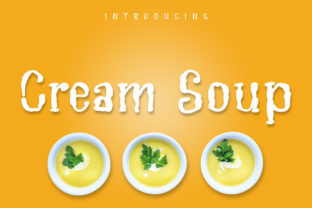
Cream Soup: A Cool Script Font for Modern Creators
Finding a script font that feels both expressive and usable is a common challenge. Many handwritten fonts sacrifice legibility for personality, or look too casual for professional work. Cream Soup strikes a compelling balance. It’s a cool script font with a distinct flow, designed to feel authentic without sacrificing the structure needed for real-world projects. Its strength lies in its careful composition and kerning—the spacing between characters—which makes it surprisingly versatile.
The Visual Character: Where Personality Meets Polish
Cream Soup isn't just another cursive. It presents a modern take on the handwritten style. The letterforms have a slight, natural irregularity that gives them warmth and a human touch, but they’re anchored by consistent baselines and thoughtful connections. This isn’t a chaotic scrawl; it’s a considered script. The overall texture is smooth, with clean strokes that avoid overly rough or distressed edges. This clarity is key to its versatility. It feels approachable and creative, yet retains a level of sophistication suitable for branding and editorial design.
Think of it as the typographic equivalent of a well-designed notebook or a thoughtfully crafted piece of packaging. It communicates effort and style without shouting. The font’s personality leans toward the friendly and artistic, making it an excellent choice for projects aiming to connect on a personal level while maintaining a professional standard.
Practical Applications: From Logos to Social Media
The true test of any typeface is how it performs in context. Cream Soup’s balanced design opens up a wide range of applications. For logo design, it can become the centerpiece of a brand identity for businesses in lifestyle, food, beauty, artisanal goods, or creative services. A bakery, a boutique consultancy, or a handmade jewelry line could use it to instantly convey a crafted, personal feel. Its legibility at smaller sizes also makes it functional for secondary branding elements.
In editorial design and publishing, Cream Soup shines in titles, chapter headings, pull quotes, and magazine layouts. It adds a dynamic, engaging element to the hierarchy of a page without competing with body text set in a clean sans serif font or a classic serif font. For book covers, especially in genres like contemporary fiction, memoirs, or cookbooks, it provides an immediate sense of voice and style.
The digital space is where this creative font truly demonstrates its utility. It’s a strong candidate for web design headers, especially on sites for portfolios, blogs, and e-commerce stores selling creative products. On social media graphics, it can make quotes, announcements, and promotional posts stand out in a crowded feed. Its clear letterforms ensure it remains readable even on mobile screens, a critical consideration for modern digital content.
For physical products and packaging design, Cream Soup is a natural fit. It can elevate labels for jars, bottles, and boxes, or add a special touch to t-shirts, mugs, and flyers. For crafters and hobbyists using cutting machines or print-on-demand services, it’s a valuable design asset that produces professional-looking results. The font’s good kerning means less manual adjustment is needed, saving time in production.
Making It Work: Selection, Pairing, and Licensing
Choosing a font is a strategic decision. Before selecting Cream Soup, consider your project’s core message. Is the goal to feel handcrafted, warm, and individual? Or is it more about bold, clean, and corporate? Cream Soup answers the former. It’s a premium font that functions as a display font, best used for headlines and short bursts of text rather than long paragraphs.
A crucial step in any design process is testing font pairing. Cream Soup’s script nature means it pairs best with simpler, more neutral typefaces. A geometric sans serif font like Montserrat or Lato creates a clean, modern contrast. A transitional serif font like Georgia or Times New Roman can offer a more classic, balanced combination. The key is to let Cream Soup be the star for key phrases while the supporting font handles the readable body copy. Always test your pairings in context—mock up a business card, a website header, or a social media post to see how the fonts interact at actual sizes.
When you acquire a commercial font like Cream Soup, review the license thoroughly. Understand what’s included: how many styles or weights are available? Are there alternate characters or ligatures that can enhance your design? The license will specify permitted uses—whether it covers a single project, multiple client projects, or commercial products for sale. This is non-negotiable for professional work, ensuring you have the right to use the font in your brand identity or on products you sell.
Finally, consider readability above all. While Cream Soup is designed for clarity, always check its performance in your specific application. Test it for color contrast against backgrounds, verify its legibility at the intended size, and ensure it doesn’t cause strain when viewed for more than a few seconds. The goal of modern typography is effective communication. A beautiful font that people can’t easily read fails its primary purpose.
Cream Soup offers a practical solution for designers and creators seeking a script font with genuine character and reliable performance. It’s a tool that can help translate a creative vision into a polished, engaging visual reality across countless mediums.