Exploring Sweeth Calligraphy: A Modern Script for Creative Projects
Finding the right script font can feel like searching for a specific voice in a crowded room. You need something that speaks with elegance but doesn't shout. Sweeth Calligraphy enters this space as a modern script font, designed to bridge the gap between traditional hand-lettering and contemporary design needs. It’s not just another cursive; it’s a tool built for versatility, featuring those delicate flourishes that add personality without overwhelming your layout. Whether you're finalizing a wedding invitation or drafting a new brand identity, understanding how this typeface performs in the real world is essential for any designer or business owner.
The Visual DNA: More Than Just Swashes
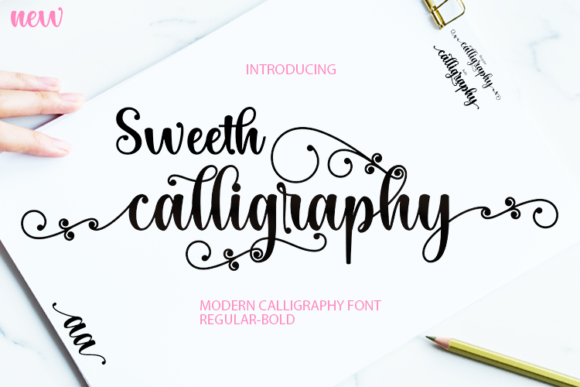
At its core, Sweeth Calligraphy is defined by its fluidity. The letterforms mimic the natural flow of ink on paper, offering a rhythm that feels organic rather than manufactured. However, unlike some traditional calligraphy scripts that can feel dated or overly formal, this font maintains a fresh, modern typography aesthetic. The "delicate flourishes" mentioned in its description aren't just random curls; they are stylistic alternates and swashes that allow you to customize the look. This is where the PUA encoding becomes a massive practical advantage. For those unfamiliar, PUA (Private Use Area) encoding means you don't need professional design software like Adobe Illustrator to access the fancy characters. You can use basic tools and still pull up the full range of glyphs, making this a highly accessible premium font for a wide range of users.
The visual weight of the font is balanced. It has enough presence to serve as a display font for headers and logos, but it retains a legibility that some handwritten font styles sacrifice. The connections between letters are generally smooth, avoiding the jagged edges that can make scripts hard to read at smaller sizes. It strikes a balance between the structured look of a sans serif font and the artistic flair of a script, positioning it as a unique middle ground for projects that need warmth and professionalism simultaneously.
Strategic Applications: Where Sweeth Calligraphy Shines
Knowing a font looks good is one thing; knowing where to use it is where the strategy comes in. Sweeth Calligraphy is versatile, but it excels in specific environments where emotional connection and visual hierarchy are paramount.
Wedding Invitations and Stationery
This is the most natural home for a script font. In editorial design for stationery, Sweeth Calligraphy provides the romantic, personal touch that clients expect. It works beautifully for the main headers on invitations, save-the-dates, and envelope addressing. Because it is a creative font, it pairs well with a clean serif font for the details (like dates and venues), ensuring that the critical information remains readable while the mood is set by the script.
Branding and Logo Design
For entrepreneurs and small business owners, a logo is the face of the company. Sweeth Calligraphy is an excellent choice for brands that want to appear approachable, elegant, or artisanal. Think bakeries, boutique clothing stores, photography studios, or lifestyle coaches. In logo design, the font can convey a sense of bespoke craftsmanship. However, it is crucial to test the font at various sizes. A script that looks gorgeous on a billboard might turn into a blob on a business card. When used correctly, it builds a brand identity that feels human and connected.
Digital Presence and Social Media
In the fast-paced world of web design and social media, standing out is difficult. Using Sweeth Calligraphy in social media graphics—particularly for quotes, announcements, or sale headers—can stop the scroll. It adds a layer of sophistication to Instagram posts or Pinterest pins. When used for packaging design, it suggests a high-quality product inside. The key here is contrast; pairing this script with a bold sans serif font creates a dynamic visual hierarchy that guides the viewer's eye exactly where you want it.
Practical Guidance for Designers and Creators
Integrating a new font into your workflow requires more than just installation. Here is how to get the most out of Sweeth Calligraphy as part of your design assets.
Mastering Font Pairing
A script font rarely works well in isolation for long-form text. The strength of Sweeth Calligraphy is unlocked through smart font pairing. Because it has a distinct personality, it needs a partner that plays a supporting role. A geometric sans serif font (like Montserrat or Lato) offers a clean, modern counterpoint to the organic curves of the script. Alternatively, a classic serif font (like Garamond or Times) can create a more traditional, formal look. Avoid pairing it with other ornate fonts; the result will be visual chaos. Let Sweeth Calligraphy be the star, and let the secondary font be the narrator.
Evaluating Readability and Hierarchy
While this is a premium font, it is still a display script. This means it is not designed for body copy. Use it for headlines, sub-headers, pull quotes, or single-word accents. When setting text in Sweeth Calligraphy, pay close attention to kerning (the space between letters). In scripts, letters need to connect, but they shouldn't overlap in a way that makes them indistinguishable. Test your layout on different devices if you are working on web design to ensure the curves render correctly on various screen resolutions.
Understanding Licensing and Usage
For commercial projects—whether it's a client's logo, a product package, or merchandise—you must ensure you have the correct commercial license. Most commercial font licenses cover standard use, but if you plan to embed the font in an app or use it on high-volume merchandise, check the specific terms. The accessibility of Sweeth Calligraphy via PUA encoding makes it user-friendly, but responsible usage means respecting the creator's licensing boundaries.
Testing the Alternates
Don't just type and go. With a font like Sweeth Calligraphy, half the value lies in the alternates. Take the time to swap out specific letters to see how different swashes affect the flow of a word. Sometimes, a simple tail on a "y" or a loop on an "h" can change the entire vibe of a design. This level of customization is what separates generic typography from truly effective modern typography.
Ultimately, Sweeth Calligraphy