Fasty: Capturing America's Pastime in Every Curve
There is something distinctly American about the sound of a ball hitting a glove or the arc of a swing under stadium lights. Fasty, a premium script font, manages to capture that exact feeling in typography. It isn't just a collection of letters; it is a nod to vintage sports aesthetics and the nostalgic charm of hand-lettered jerseys. For designers, brand strategists, and small business owners, this typeface offers a specific mood that is difficult to replicate with standard system fonts. It bridges the gap between the elegance of calligraphy and the rugged energy of athletics.
The Anatomy of a Slugger
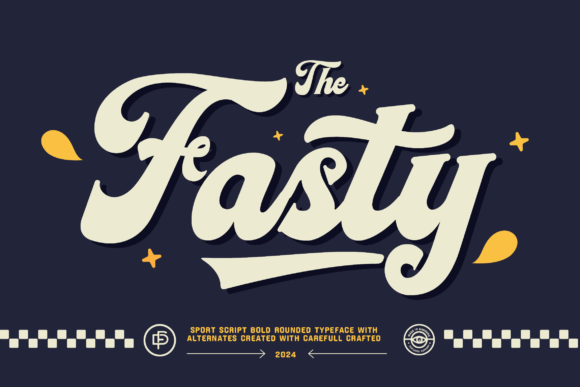
When we talk about modern typography, we often focus on clean lines and minimalism. Fasty takes a different approach. It is a script font defined by its flowing, cursive strokes that emulate the fluid motion of a pitcher’s windup. Unlike rigid sans serif fonts or traditional serif fonts, Fasty connects letters seamlessly, creating a sense of speed and continuity. This connecting style is crucial for readability in display contexts, as it guides the eye naturally from one character to the next.
What sets this typeface apart from generic handwritten fonts is the thematic detailing. You will often notice subtle design cues—perhaps the tail of a 'y' that mimics the curve of a bat, or the dot of an 'i' that feels like a stitched seam. These elements are not overbearing; they are stylistic whispers that give the font its personality. It manages to be playful without becoming cartoonish, striking a balance that works well for brand identity and logo design.
Authenticity in Design
In an era where digital perfection can feel sterile, Fasty brings a human touch. It looks as though it was sketched by a talented sign painter outside a ballpark. This authenticity is a powerful tool for content creators and marketers looking to evoke trust and nostalgia. It feels handmade, yet it possesses the consistency required for professional design assets.
Real-World Applications: Where Fasty Hits a Home Run
Understanding where to deploy a creative font like Fasty is just as important as the design itself. Because it is a display font, it is best used for headlines, logos, and short bursts of text rather than long-form body copy. Here is how different professionals can leverage its style:
- Packaging Design: If you are designing labels for craft beverages, artisanal goods, or snacks, Fasty adds an immediate layer of personality. It suggests that the product inside is made with care and tradition.
- Editorial Design: For magazine covers or blog headers, especially those covering lifestyle, sports, or food, this font creates an engaging visual hierarchy. It draws the reader in immediately.
- Web Design: Used sparingly, Fasty can break up the monotony of standard web typography. It works exceptionally well for hero sections or call-to-action buttons where you want to inject some energy.
- Social Media Graphics: Platforms like Instagram and Pinterest thrive on visual distinctiveness. A bold script font helps stop the scroll, making your quotes or announcements stand out against a busy feed.
Strategic Implementation and Brand Perception
Choosing a font is a strategic business decision, not just an artistic one. The typography you choose signals your values to your audience. Selecting Fasty signals that your brand is approachable, energetic, and perhaps a bit nostalgic. For entrepreneurs and small business owners, this can be a game-changer. It helps build a brand voice that feels personal and direct.
Visual Hierarchy and Readability
One of the most common mistakes in web design and print is using a script font for body text. While Fasty is legible for headlines, applying it to paragraphs would strain the reader's eye. Instead, use it to establish hierarchy. Pair a bold instance of Fasty for your H1 or H2 tags with a clean, geometric sans serif font for the body text. This contrast creates a dynamic rhythm on the page. The script font draws attention, while the sans serif ensures the message is consumed easily.
Font Pairing Strategies
Fasty pairs best with typefaces that don't compete for attention. Because Fasty has high personality, it needs a "quiet" partner.
- The Classic Combo: Pair Fasty with a neutral sans serif like Open Sans or Lato. The clean geometry of the sans serif grounds the fluidity of the script.
- The Vintage Look: If you are going for a retro vibe, try pairing it with a sturdy serif font like Playfair Display or a slab serif. This creates a rich, textured look often seen in editorial design.
- The Modern Edge: Use a monospaced font for smaller details or captions to contrast with the organic flow of Fasty. This mixes analog warmth with digital precision.
Practical Considerations for Professionals
Before integrating Fasty into a client project or your own brand, a few technical checks are necessary. First, review the licensing. Since this is a premium font, ensure the license covers commercial use, especially if you are creating merchandise or large-scale print runs. Most foundries offer different tiers for desktop, web, and app usage.
Second, test the font at various scales. A script font might look stunning on a desktop screen but could lose legibility on a small mobile device if the x-height is too low. Check how the letters connect in different word combinations. Does the 'r' connect awkwardly to the 't'? These micro-details matter in professional logo design.
Finally, consider the context of your industry. While Fasty is perfect for a sports blog, a bakery, or a lifestyle brand, it might feel out of place on a corporate banking website. Knowing your audience is key. For the designer, marketer, or crafter looking to inject a dose of American nostalgia and kinetic energy into their work, Fasty is a robust and versatile tool that delivers real character.