Lostmera: Where Clean Sans Serif Meets Playful Script
There's a particular kind of design challenge that comes up more often than you'd think. You need something professional enough for a brand identity, but you also want personality. Something modern, but not cold. Something playful, but not childish. Most fonts force you to pick a side. Lostmera doesn't.
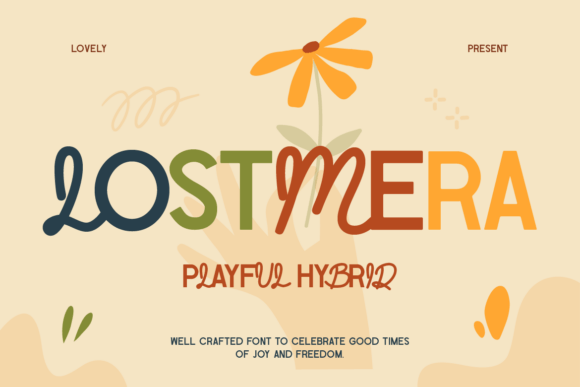
This hybrid typeface sits at an interesting intersection. It carries the structural clarity of a sans serif font while weaving in the expressive, flowing qualities of script lettering. The result feels familiar yet fresh—like discovering a favorite café that somehow combines minimalist architecture with warm, inviting interiors. You notice it immediately, and it sticks with you.
What Makes Lostmera Stand Out
At its core, Lostmera is a display font designed for moments when you want your typography to do more than just sit there. The clean lines give it a modern foundation, which means it doesn't feel fussy or overly decorative. But the script elements—the subtle curves, the playful letterforms—inject warmth and approachability that pure sans serif fonts often lack.
Here's where it gets genuinely interesting: the ligatures. When certain letter combinations come together, Lostmera connects them in ways that feel organic rather than mechanical. These aren't gimmicks. They're carefully crafted transitions that give your text a sense of movement and rhythm. A logo set in Lostmera feels like it has a pulse. A headline feels like it's inviting you in rather than announcing at you.
The font's personality lands in a sweet spot that many designers chase but rarely find. It's fun without being unprofessional. It's elegant without being stuffy. It's modern without being sterile. That combination makes it surprisingly versatile across different contexts and audiences.
Where Lostmera Truly Shines
Think about the brands and projects that stick in your memory. They usually have something distinctive in their visual language—something that feels intentional but effortless. Lostmera works particularly well in scenarios where you need that kind of visual signature.
Logo design and brand identity are obvious starting points. If you're building a brand for a boutique business, a creative studio, a lifestyle product, or a personal brand, Lostmera gives you instant character. The hybrid nature means your logo can feel polished and playful simultaneously, which is exactly the balance many small business owners are looking for. It works beautifully for bakeries, florists, creative agencies, wellness brands, and anything that wants to feel human and approachable.
Packaging design is another natural fit. On a shelf crowded with predictable typography, Lostmera catches the eye. Its script elements create a handcrafted feel, while the sans serif structure keeps everything legible and organized. Product labels, box designs, shopping bags, and wrapping materials all benefit from that combination.
For editorial design and publishing, consider using Lostmera for chapter titles, pull quotes, magazine headers, or blog post titles. It adds visual interest without overwhelming the reader, and it pairs well with clean body text fonts. Bloggers and content creators can use it for featured graphics, Pinterest pins, or YouTube thumbnails where you need type that pops at small sizes.
Social media graphics are where Lostmera really comes alive. Instagram stories, Facebook covers, Pinterest graphics, and promotional posts all benefit from typography that feels energetic and distinctive. The font's playful character translates well to screen-based formats where you have roughly two seconds to grab someone's attention.
Don't overlook web design applications either. Used strategically for hero sections, call-to-action headlines, or navigation accents, Lostmera adds personality to digital experiences. Just be mindful of readability at smaller sizes—this is a display font, so it works best at larger point sizes where its details can breathe.
Making Lostmera Work in Your Projects
Choosing the right font for a project isn't just about personal taste. It's about fit. Before reaching for Lostmera, ask yourself a few practical questions.
First, consider your audience. Lostmera appeals broadly, but its playful-script quality resonates most with audiences who value creativity, warmth, and authenticity. If you're designing for a law firm or a financial institution, it might not be the right choice. But for lifestyle brands, creative businesses, food and beverage, beauty, education, children's products, or event invitations, it's worth serious consideration.
Second, think about font pairing. Lostmera does its best work as a headline or accent font, not as body text. Pair it with a straightforward sans serif font or a classic serif font for longer passages. A clean geometric sans serif creates a nice contrast that lets Lostmera's personality shine without competing. A simple serif font can complement its elegance. Test different combinations before committing, and pay attention to how the x-heights and weights interact.
Third, review the included styles and weights. Many premium fonts come with multiple variations—bold, light, italic, condensed—that expand your options significantly. Understanding what's available in the font family helps you create visual hierarchy and maintain consistency across a project.
Fourth, readability matters. Test Lostmera at the actual sizes you'll use. Display fonts can look stunning at 48 points but become difficult to read at 14 points. Make sure your headlines, subheadings, and accent text remain clear across devices and print formats. This is especially important for web design and social media graphics where screen resolution and viewing distance vary.
Finally, check the commercial licensing. If you're using Lostmera for client work, merchandise, or commercial products, verify that the license covers your intended use. Most premium font licenses are straightforward, but it's worth confirming before a project goes to print or launch.
Building a Visual Language Around Lostmera
The most effective typography choices aren't isolated decisions. They're part of a larger visual system. When you bring Lostmera into a project, think about how it connects with your color palette, imagery style, spacing, and overall design direction.
Its playful-modern character pairs naturally with warm color palettes, organic shapes, and photography that feels authentic rather than overly polished. It works well alongside hand-drawn illustrations, watercolor textures, or simple geometric patterns. The key is creating a cohesive mood where every element reinforces the same feeling.
For brand identity work, using Lostmera consistently across touchpoints—business cards, website headers, social media profiles, email signatures, packaging—builds recognition. People start associating that distinctive lettering style with your brand before they even read the words. That's the power of a well-chosen creative font.
Lostmera isn't trying to be everything to everyone, and that's precisely what makes it valuable. It occupies a specific, intentional space in the typography landscape: modern enough for contemporary projects, playful enough to feel alive, and refined enough to maintain professionalism. Whether you're designing a logo, laying out a magazine, building a website, or creating social media content, it offers something most fonts don't—a genuine sense of joy wrapped in clean, purposeful design.