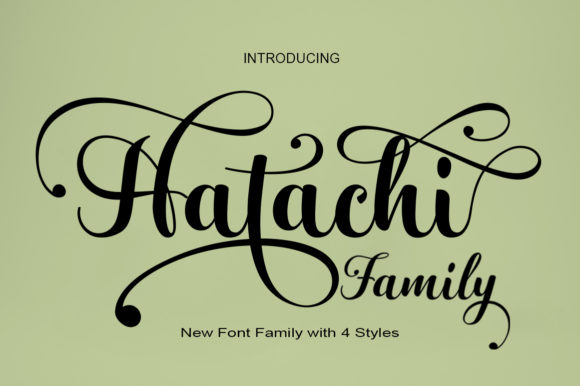
Hatachi Family: A Script with Elegant, Dancing Character
There’s a specific kind of visual energy you get from a typeface that feels both refined and alive. It’s the difference between a static, printed word and one that seems to have just been written with a flourish. The Hatachi Family lives in that dynamic space. As a premium script font, it’s built on the foundation of beautiful calligraphy, but it translates that into a digital form that feels personal and immediate. The characters have a natural, dancing lineage—a slight, graceful movement that prevents them from looking rigid or overly formal. This is a handwritten font with a clear personality: elegant, yet approachable; decorative, yet functional for specific tasks. It’s the kind of creative font that can inject a human touch into a digital world, making it a valuable asset for a wide range of projects.
Where Hatachi Truly Shines: From Wedding Invites to Brand Marks
Understanding a font’s sweet spot is key to using it effectively. Hatachi isn’t your go-to for body text in a research paper or the primary navigation on a complex website. Its strength lies in its ability to command attention with grace in targeted applications. Think of it as a specialist tool in your design toolkit.
For print and tangible goods, this typeface excels. Its elegant script style makes it a natural fit for wedding invitations, save-the-dates, and any formal event stationery. It brings a bespoke, handcrafted feel to greeting cards and thank-you notes. In packaging design, especially for boutique products like artisanal chocolates, perfumes, or handcrafted soaps, Hatachi can elevate the perceived quality and craftsmanship. The same principle applies to business cards for creatives—a photographer, wedding planner, or interior designer can use it for their name or tagline to make a memorable first impression.
In the digital and branding realm, its applications are just as potent. For logo design, Hatachi can form the core of a brand identity for a lifestyle blog, a café, a boutique hotel, or a high-end florist. It conveys a sense of personal service and aesthetic care. On social media, it’s perfect for creating impactful quotes, story headlines, or promotional graphics that need to stand out in a fast-scrolling feed. It can be used for digital product mockups, email newsletter headers, or as a stylistic accent on a website’s landing page—perhaps for a special announcement or a featured testimonial. The key is using it for headlines, logos, and accents where its decorative nature can be appreciated without compromising overall readability.
The Practical Side: Choosing and Using Hatachi with Confidence
Adding a new font to your library is more than just a download; it’s a decision that affects your project’s clarity and professionalism. Here’s a practical guide to evaluating and implementing a script font like Hatachi.
First, evaluate the project fit. Ask yourself: Does this project call for a personal, elegant, or celebratory tone? If you’re designing a technical manual or a minimalist tech startup’s branding, a clean sans-serif font is likely more appropriate. But if the goal is to evoke emotion, tradition, or artistry, Hatachi becomes a strong candidate. Always consider your audience. The flowing nature of a script font resonates differently than a stark, modern typography choice.
Next, test font pairings rigorously. A script font like Hatachi rarely works alone in a comprehensive design. It needs a partner for legibility and hierarchy. The classic approach is to pair it with a neutral, sturdy serif font or a clean sans-serif font. For example, use Hatachi for a main headline and a highly readable sans-serif for subheadings and body copy. This creates a clear visual hierarchy and ensures your message is both beautiful and digestible. Always test your pairing at different sizes to see how the contrast holds up.
Finally, review the included styles and licensing. A well-designed premium font family often includes alternates, ligatures, and stylistic sets. These are alternate character designs that can add variety and a more authentic handwritten feel to your text. Explore them in your design software. Equally important is understanding the commercial font license. Ensure the license covers your intended use, whether it’s for a single client project, unlimited commercial projects, or web embedding. Proper licensing is non-negotiable for professional work and protects both you and the font designer.
Choosing a creative font like Hatachi is ultimately about finding the right voice for your message. When used thoughtfully, it doesn’t just spell out words—it communicates feeling, sets a scene, and builds a connection with the viewer, making it a powerful piece in your collection of design assets.